Today we walked through the village behind the Point of
Hope. Taylor, 2 Peter (so named because
there is a 1 Peter who is on the Board of Directors for Buckner Romania), and
myself went out into the village where the children who attend PoH live. Taylor was on assignment to do a video of the
community and the people, so that foreigners can see the conditions that the
Roma (gypsy) people live in. Not that we
as a foundation are trying to exploit the people, but to make others aware of
the importance in educating these children.
If there is to be a break in the cycle of poverty, it must begin with
the youngest generation now.
So what did we see?
To put it into one word – slums.
Many of the “houses” were nothing more than shanties. There were a couple of nice looking houses,
but most were barely hanging together.
Roofs sagged, had holes in them, and many were open at the eaves.


As we walked down the first street, there was an older man
walking behind us talking.
Since Taylor
and I aren’t fluent in Romanian, we had no idea what he was saying.
He passed as we stopped to look around the
village.
Peter told us then that the man
was complaining about the Americans coming over and taking their money.
Little did he know that we are trying to
raise money for the school, so that he and his community may one day benefit
from the children’s education (and the American money).
Oh well, disgruntled neighbor….move on down
the road.
A few houses down, we met a
couple sitting inside their fence.
As we
said hello to them, they struck up a conversation.
They were very interested in why we were
taking pictures.
When 2 Peter told them
what we were doing, they were very excited and invited us into their home.
Wow!
Wasn’t expecting that.
We
excepted their invitation and they were most gracious.
Their home was a small 2 room house with no
kitchen or bathroom.
The front room was
used mainly as a living area, but was also a bedroom at night.
The second room was a bedroom.
Their “kitchen” area was a small pass-thru between
the two rooms.
There was a 2 burner hot
plate and a couple of pots.
The bathroom
was an outhouse across the road.
Water
was brought in for cooking.
The inside
was filled with pictures of their children and grandchildren, along with
artificial flowers and lots of knick-knacks (probably all the valuables they
owned).
The woman told us that her
husband had worked in the factory for 25 years, but he was too young to get
retirement.
As we talked, their grandson
came into the house.
We was a very nice
young man who will be in the 7
th grade, and is a mentor student of
Peter’s.
 |
| couple who invited us into their home |
 |
| Taylor (l) and Peter (r) |


Met a few of their neighbors, who like the man walking
behind us, didn’t want us in their area.
They didn’t have any children who attended our school, therefore, we had
no business filming them. Ok, so we
left. From there, we went behind the
houses and up a hill to get a full view of the village. I felt much like a mountain goat, as we
headed up the steep hill and made our own trail. I reached one point where climbing wasn’t
going to happen, so I told the guys that I would wait for them there. I sat down on the hillside and took in the
view. How sad that people are living
like this, yet no one tries to get out of the situation. Why?
Are they content to live in poverty, do they not want to live better, or
have they just given up hope of any life other than the one they’re
living? I think most of them would like
to work, however, there are no factories left to employ them. If any of them do work, it’s usually at the
abandoned factories – stripping the metal from the walls and floors to
sell. After filming the village from
above, we walked across the creek to the other side of the village. Again, we were met with disgruntled looks
from many, but met an older lady walking with her infant granddaughter in her
arms. She, too, asked about the cameras,
and Peter told her about our project.
She said she was a Christian and had remembered me at the gypsy church
last summer. We visited for quite a
while with her as children began to “drop” by.
Our course they were very interested in having their picture taken, so I
obliged. This brought several parents
out, wanting to know why we were taking pictures of the kids. The woman explained to them that we were
working with the school, and that seemed to ease their mind.

As we returned to the Point of Hope, we met with some of the
people sitting outside the fence.
One
man told us of working all day in the factory and only got 20 lei for his
efforts.
He also shared with us that the
week before, a wall had fallen on one man and killed him – he had 4 children he
was trying to support.
One young man
showed us his shoes, which had the toes out, and was wanting new ones from the
school.
We told him that new shoes
should be arriving in October.
This
young man was quite intrigued with Taylor’s toe shoes, even wanting to trade
with him.
As we laughed together, more
young men joined in our “conversation”.
It became apparent to the people that we were friends, and are very
concerned about their situation.
Hopefully, we made a contact that will increase our ability to “go out
among the people”.
This even took place on Tuesday, September 4
Gypsy village in Tarnaveni


 After saying our goodbyes, we walked across the street to
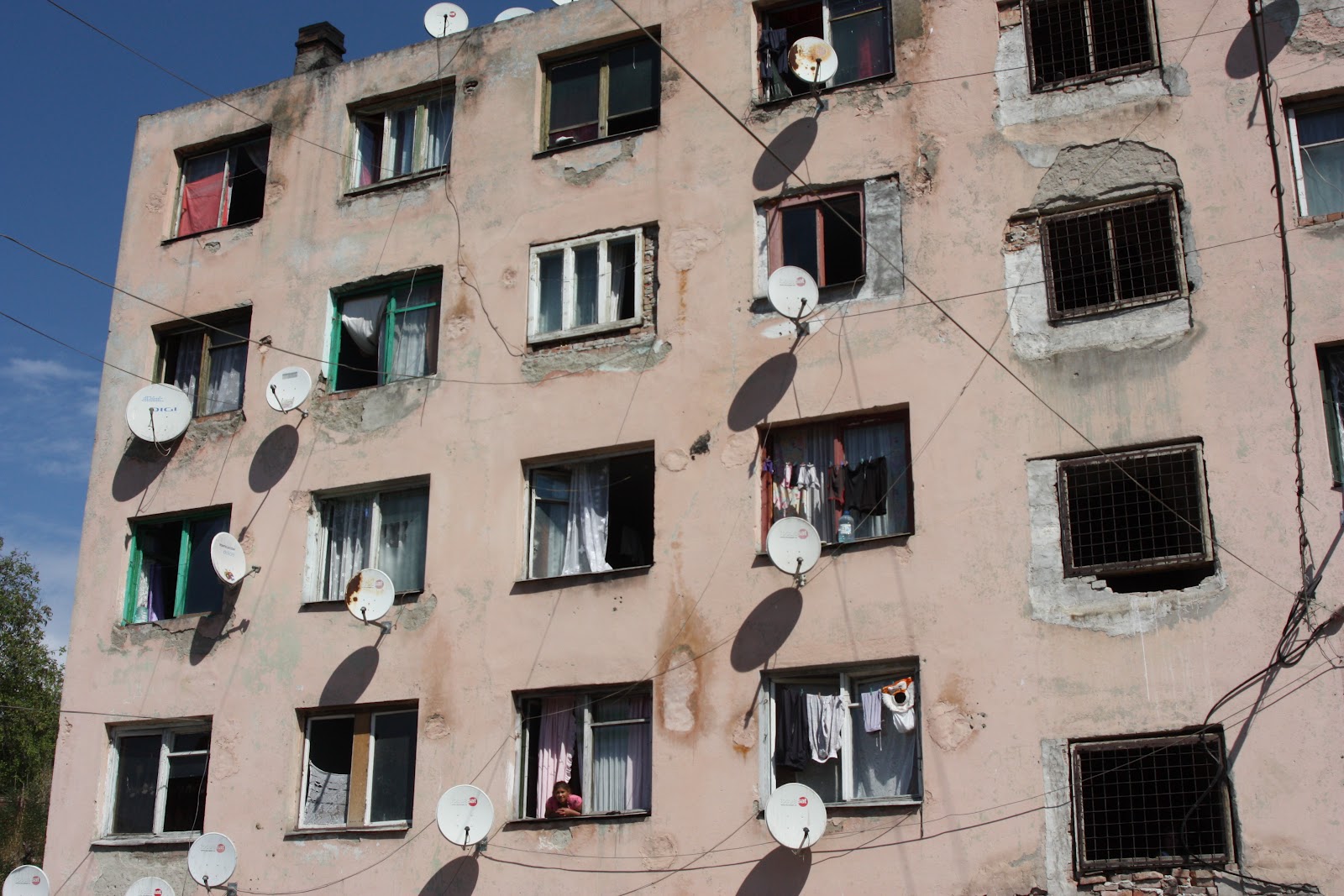
another apartment building to visit our next 2 families. This building is where most of the children
who attend Point of Hope live. There is
no running water in the building – a pump is located just outside, where the
children will gather water in buckets to take inside for cooking. I have seen many children and adults bathing
outside at the water pump. Inside, the
concrete blocks and brick are crumbling; the steps are treacherous. The railing on the stairwell would definitely
not pass safety standards in the US. The
hallways are very dark and narrow (about 4’).
Most apartments have their doors open for air flow; a few just have
sheets hanging for doors. Children were
running everywhere. One mom was sitting
in her doorway peeling potatoes. You
could feel the heat from a stove burning.
Outside, a young boy was using a pick ax to chop pieces of lumber he’s
found. As we prepared to enter the 1st
home, many of the neighbors came out to see who we were and why we were there.
After saying our goodbyes, we walked across the street to
another apartment building to visit our next 2 families. This building is where most of the children
who attend Point of Hope live. There is
no running water in the building – a pump is located just outside, where the
children will gather water in buckets to take inside for cooking. I have seen many children and adults bathing
outside at the water pump. Inside, the
concrete blocks and brick are crumbling; the steps are treacherous. The railing on the stairwell would definitely
not pass safety standards in the US. The
hallways are very dark and narrow (about 4’).
Most apartments have their doors open for air flow; a few just have
sheets hanging for doors. Children were
running everywhere. One mom was sitting
in her doorway peeling potatoes. You
could feel the heat from a stove burning.
Outside, a young boy was using a pick ax to chop pieces of lumber he’s
found. As we prepared to enter the 1st
home, many of the neighbors came out to see who we were and why we were there.


 The 2nd family we visited had 7 children – 2 who
are married, one who is autistic, 2 in school, 2 in preschool and 1 at home
(home – a 8’x12’ room with one window, padded front door, 2 sofas, a very small
table, one wardrobe and a small heating element). The father is working out of
town and comes home for a couple of days each month. The greatest difficulty for this mom is being
alone – she misses her husband tremendously, but at least he’s working. It is also difficult because of her autistic
son – he must have constant supervision, which means mom. I asked if she had any help so that she could
leave for a while, and she said that her 18 yr old daughter would come stay
with him.
The 2nd family we visited had 7 children – 2 who
are married, one who is autistic, 2 in school, 2 in preschool and 1 at home
(home – a 8’x12’ room with one window, padded front door, 2 sofas, a very small
table, one wardrobe and a small heating element). The father is working out of
town and comes home for a couple of days each month. The greatest difficulty for this mom is being
alone – she misses her husband tremendously, but at least he’s working. It is also difficult because of her autistic
son – he must have constant supervision, which means mom. I asked if she had any help so that she could
leave for a while, and she said that her 18 yr old daughter would come stay
with him.

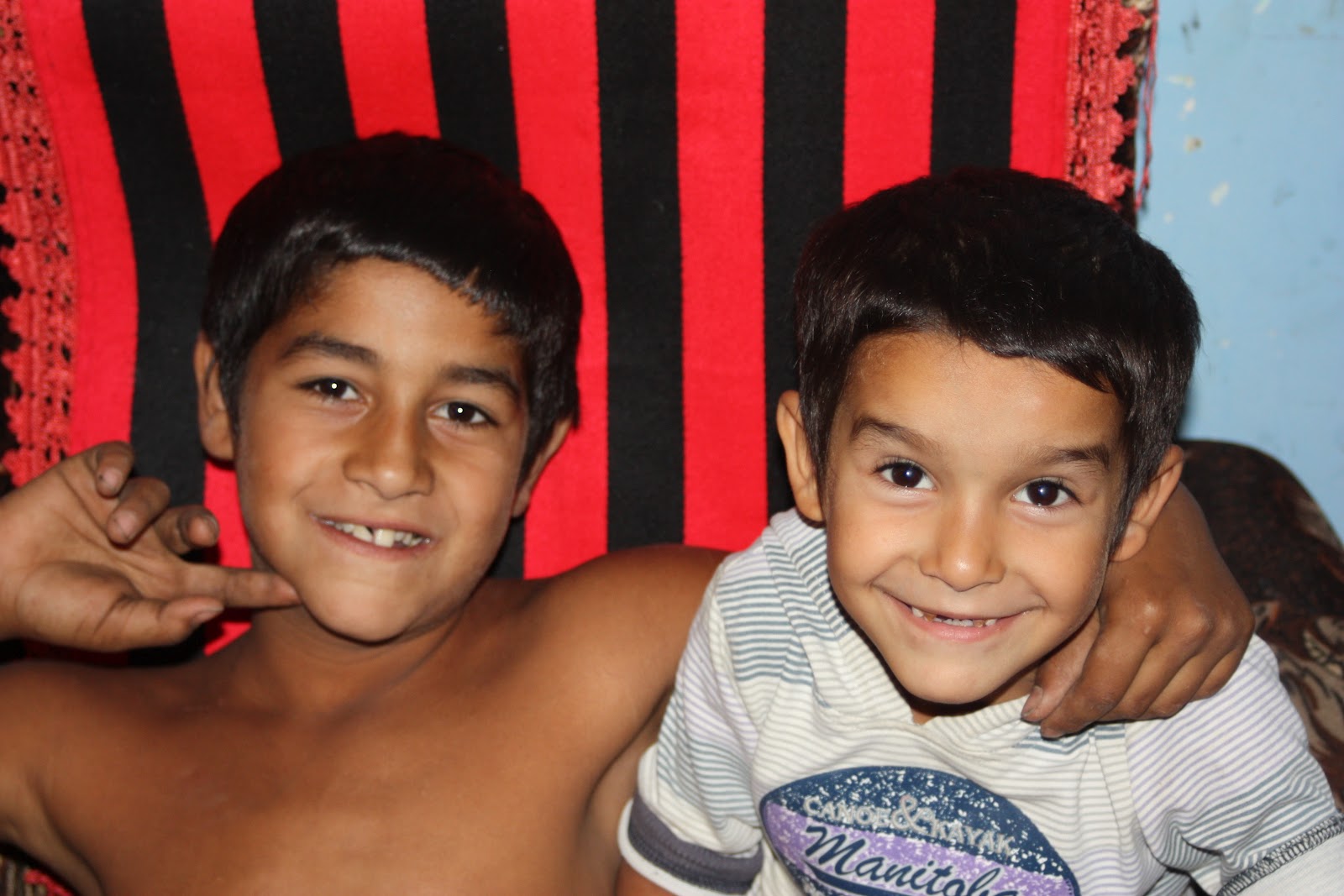
 The 3rd family was just across the hallway. The home was exactly the same size and shape,
although this home had more furnishings.
The father doesn’t work, and the mother will sometimes go to the factor
looking for metal. There are 2 children,
both who attend Point of Hope. When
asked what the most difficult aspect of their living conditions, it was the
lack of bani (money). She, too,
expressed the need for working factories so that the people could have jobs.
The 3rd family was just across the hallway. The home was exactly the same size and shape,
although this home had more furnishings.
The father doesn’t work, and the mother will sometimes go to the factor
looking for metal. There are 2 children,
both who attend Point of Hope. When
asked what the most difficult aspect of their living conditions, it was the
lack of bani (money). She, too,
expressed the need for working factories so that the people could have jobs.


 These are the factories that the people go into looking for metal to sell. The people have been looting what they can find since the fall of communism and the collapse of their economy. There's not much left of either the buildings or metal. The integritry of the building is so that walls are starting to fall, and that puts all the people inside at risk of death.


